
Fear
Ads and videos written to this emotion: 100. 78 make the Say move, 9 make the Avoid mistake.
The Emotion Map's entry, written for B2B buyers.
What it is
A gut lurch when danger feels right here. It flares hard and fades fast, while anxiety lingers.
Where it shows up
A sudden event: a key client leaving, a regulator's notice, a competitor's price cut.
Sounds like
"We need something now."
Say
A fast, bounded response with one clear owner, then move the conversation to the structure.
Avoid
Urgency pricing on the spike. The voluntary ICC Code (2024) says marketing should not play on fear without a justifiable reason.
In consumer ads
Say: A fast, bounded response with one clear owner: one number to call, one thing to do now, who comes and when.
Avoid: Urgency pricing on the spike, such as a scare followed by a countdown price, and playing on fear without a justifiable reason.
Doing it right
Ads that make the Say move.

Flit insecticide ad, al-Musawwar 1929
Under the flat headline 'Flies bring disease', flies stream through an open window toward a sleeping child, and the copy answers with one act: spray Flit, which kills insects without harming people.

The skull, built of thin halftone hatching, surfaces a beat after the pump and bottle, so the consequence arrives unexplained, and the three-word 'Don't mix 'em' gives a moving reader the one act.
Flit insecticide ad, al-Musawwar 1928
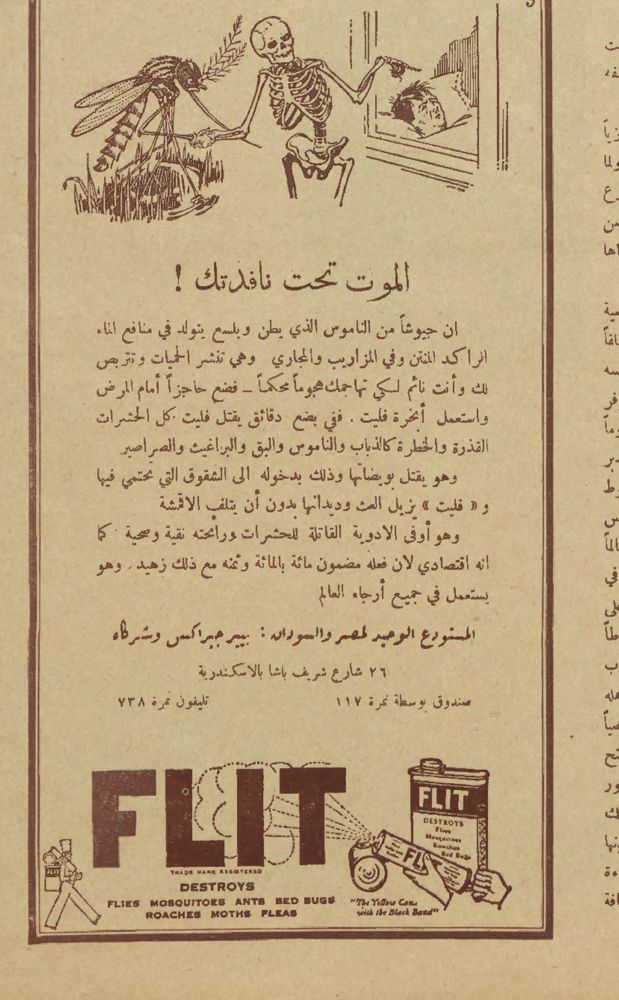
A skeleton leading a giant mosquito to a sleeper's window shows death, but the copy ties it to fevers bred in stagnant water and ends on one act: a barrier of Flit vapour.

Disaster safety warning poster
Under an exploding ship, the poster names the cause, receivers can help the enemy sink you, and ends on one order the sailor controls, set in the heaviest type: Don't Use Them.

Flit insecticide ad, al-Musawwar 1928
The copy turns the reader from the tiger to the smaller killer, the mosquito bred in stagnant water, then offers a cheap insecticide that kills within minutes and reaches eggs in cracks.
Don't Jay Walk road safety poster, 1937
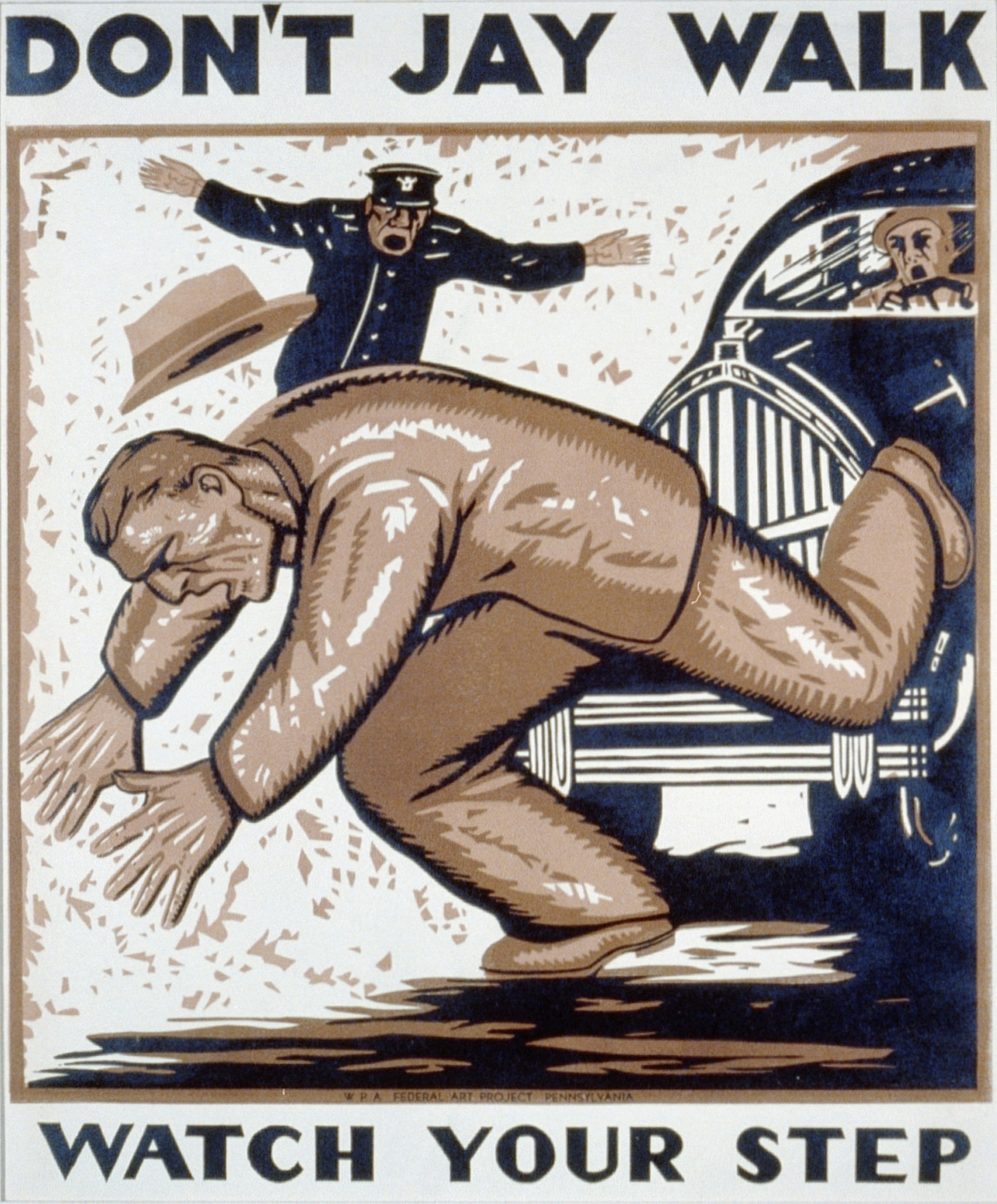
A man frozen mid-air as the car hits supplies the alarm, while the calm lines DON'T JAY WALK and WATCH YOUR STEP give the one thing the walker can do.
Flit insecticide ad, al-Musawwar 1928
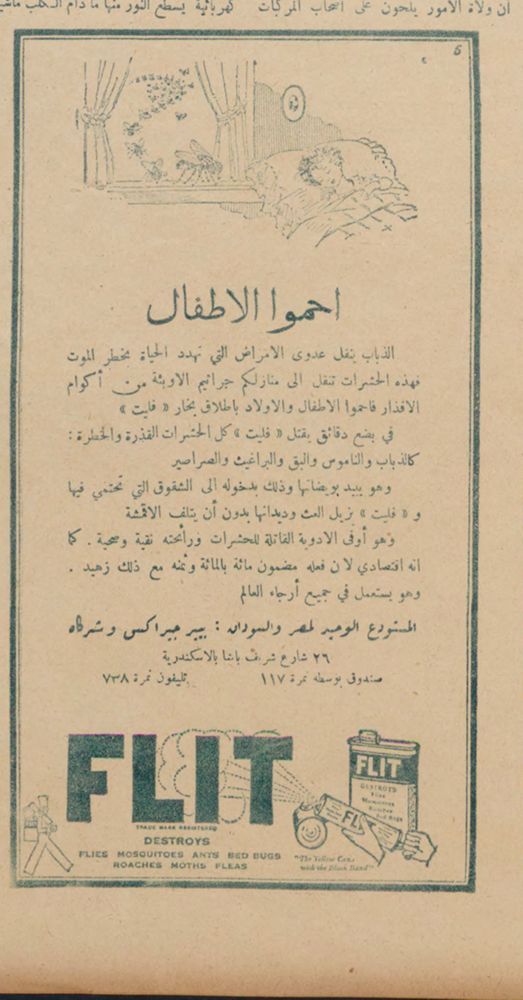
Flies pouring through the curtain onto a sleeping child, named as carriers of deadly disease, raise the alarm, then one bounded act follows: spray Flit, which kills in minutes and will not stain fabric.

This Is Trench Foot, Prevent It poster
The trench foot photo sits small in the corner while the main picture shows the fix, a soldier drying bare feet with a clean cloth, under KEEP FEET DRY AND CLEAN.
Flit insecticide ad, al-Musawwar 1928
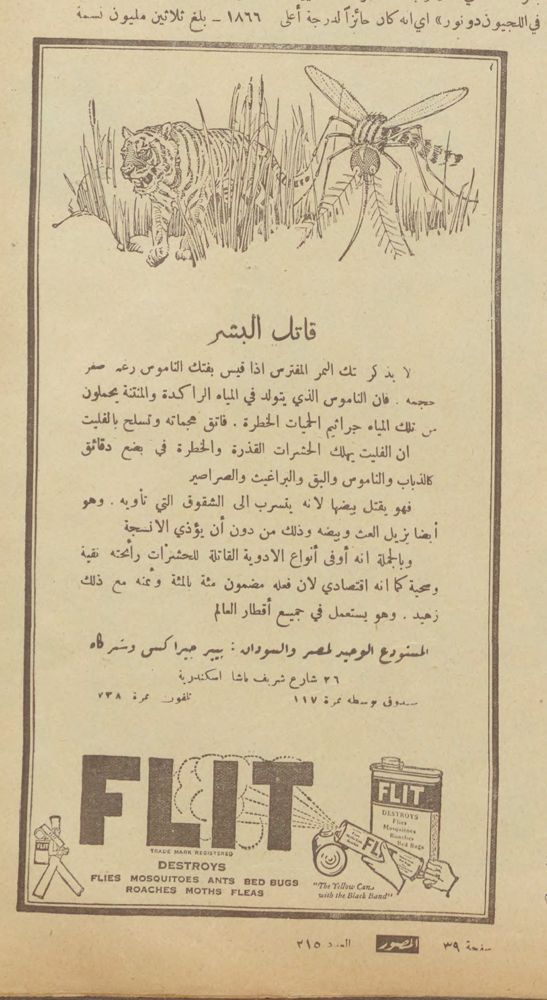
A mosquito drawn larger than the crouching tiger names a real danger, deadly fevers from stagnant water, then gives one bounded answer: "arm yourself with Flit", with the Alexandria depot named.

"Be Wise, Don't Play with Firecrackers" poster
The child's head is cut out of a firecracker that dwarfs it, so the danger reads with no injury shown, and the tilted bars end on one act the child owns: don't play with firecrackers.

Flit insecticide ad, al-Musawwar 1929
A fly and a mosquito drawn man-sized attack a father, mother and child, and the one-word order 'Chase them out' hands the family a step at once: spray Flit, sold only in sealed tins.

"Be Wise, Don't Play with Firecrackers" poster
A red wedge of the firecracker slicing across the child's eye hints at blinding without drawing it, and the three tilted bars close on the only step needed: don't play with firecrackers.

اعلان البنك الأهلي المصري - الفاظة اللي بنت حضرتك كسرتها - رمضان 2014
The dreaded line, the vase your daughter broke costs 1200 pounds, strikes in an antique shop, and the card answers at once with its terms on screen: longest grace period, lowest interest, an ATM count.

❤️ 🚗 جهاز التعاونية درايف يكافئك على قيادتك السليمة، ويهتم فيك لو صار لك حادث لا قدر الله
The crash is a fear spike, and the ad answers it with a fast, bounded response with one clear owner: a named employee who calls, sends help and follows the claim.
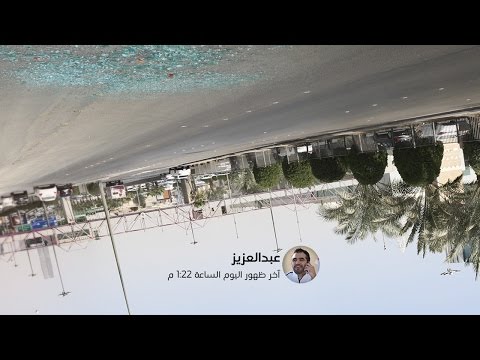
It shows a crash caused by a phone at the wheel, then hands the driver one simple act he owns: connect when you arrive.
Doing it wrong
Ads that make the Avoid mistake.

Liberty Bonds poster: "Hun or Home?"
Reduces the war to 'Hun or home?', a mother clutching her baby beside a crouching soldier and a body, a false choice built to frighten readers into more bonds.

U.S. Army 'Destroy this mad brute' enlistment poster
It invents a drooling ape in a 'Militarism' helmet carrying a woman onto American soil to frighten the reader, then answers with one word, ENLIST, and a faint office line.

Liberty Bonds poster: "Beat Back the Hun"
Paints the enemy with red-dripping hands and a bloody bayonet looming over the reader's horizon, letting a scare image do the arguing for Liberty Bonds.

War bonds poster: "Keep This Horror From Your Home"
It places a racist caricature gripping a terrified woman's face inside 'Your HOME'; the 10% step is clear, but the fear is built on a slur, not a justifiable threat.

Fourth Liberty Loan poster: That Liberty Shall Not Perish
Stages the worst case at home, a headless Statue of Liberty in a burning New York harbor under enemy planes, to shock readers into bonds rather than show a real, bounded danger.
Its self-examination page makes one 'Yes' among some thirty everyday symptoms, from backache to bad dreams, a sign of danger, so almost every reader is told 'your life is in danger'.
Doctor Pierce's Anuric Tablets booklet
To sell tablets for rheumatism and backache it warns that death follows within hours if the kidney cells fail, a threat far larger than the complaint, though it does supply a full regimen.
Alfred Fennings' Every Mother's Book, 1858
It opens on nearly half of babies dying before five and casts the doctor's calomel, lancet and leech as 'Mineral Poisons and Deadly Drugs', frightening mothers away from doctors and toward Fennings' powders.
Guilt heavier than the lapse
Alfred Fennings' Every Mother's Book, 1860
It sets a real death rate, nearly half of babies before five, against doctors, picturing children 'closed in lasting sleep' by mercury, lancet and leech, to make the mother her child's only doctor.
If this library is useful, leave an email
We send new patterns, ads, and notes when we add them. Name and phone are optional.
You are on the list
We will write when we add more library material.