
Nostalgia
Ads and videos written to this emotion: 54. 33 make the Say move, 1 make the Avoid mistake.
What it is
A wistful longing for the past. It comforts, but misleads when we remember it as better than it was. Usually it is your own past (childhood, family, a home you left), sometimes an era known only from stories.
Where it shows up
Old jingles brought back, heritage packs, "since 1950", a grandmother's recipe, Ramadan as it used to be, the brands of the viewer's teenage years.
Say
Carry something real from then into now: the same recipe, song, pack or ritual, still here, so the past vouches for the product. Then say plainly what it does for the reader today, because the warm feeling can crowd out the point. It works best with people who already hold a memory of the brand.
Nostalgic ads persuaded slightly more than plain ones, and the lift was larger when the brand or product was tied to viewers' own memories and for products bought for pleasure (Cheng and Yan 2023, 31 studies, 5,814 people). Limit: checked against the abstract only, so the share of lab and student samples is unknown.
An ad built on viewers' own past beat a historical-nostalgia ad and a plain ad on warm feelings and liking of the ad, but trailed the plain ad on thoughts about the brand and recall of the message (Muehling and Pascal 2011, one experiment). Limit: the abstract does not give the sample size.
Avoid
"Things were better then": it cuts the past off from the reader's present, and nostalgia for a past that feels cut off lowers mood instead of lifting it. Also a past the brand did not have: a founding year, "the original recipe" or "unchanged since" is a factual claim and has to be true.
Among first-year university students in the UK, nostalgia helped well-being when they felt their past still ran on into their present; when that link was weak, it lowered well-being, confidence in coping and interest in new opportunities (Iyer and Jetten 2011, one survey over time and two experiments). Limit: students only, not an advertising study, and sample sizes were not read.
Sources
- Cheng and Yan (2023). International Journal of Advertising 42(2).
- Muehling and Pascal (2011). Journal of Advertising 40(2).
- Iyer and Jetten (2011). Journal of Personality and Social Psychology 101(1).
Doing it right
Ads that make the Say move.
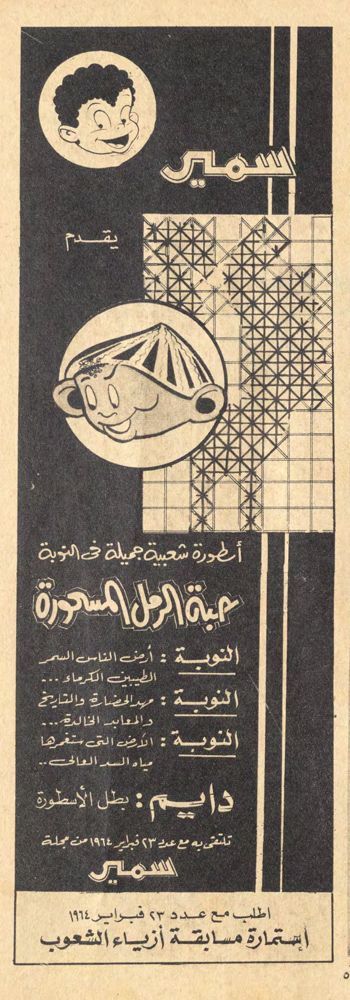
Samir children's magazine Nubian legend story ad, al-Kawakib 1964
It carries a Nubian folk legend into the 23 February 1964 issue as Nubia waits for the High Dam waters, then names the story, its hero Dayim, and the costume contest form.

Kodak "Photography with the bother left out" ad
The picture shows a man reliving his vacation by the fire months later, carrying that past into winter evenings, then the copy says plainly what Kodak does today: no dark-room, fewer chances for mistakes.
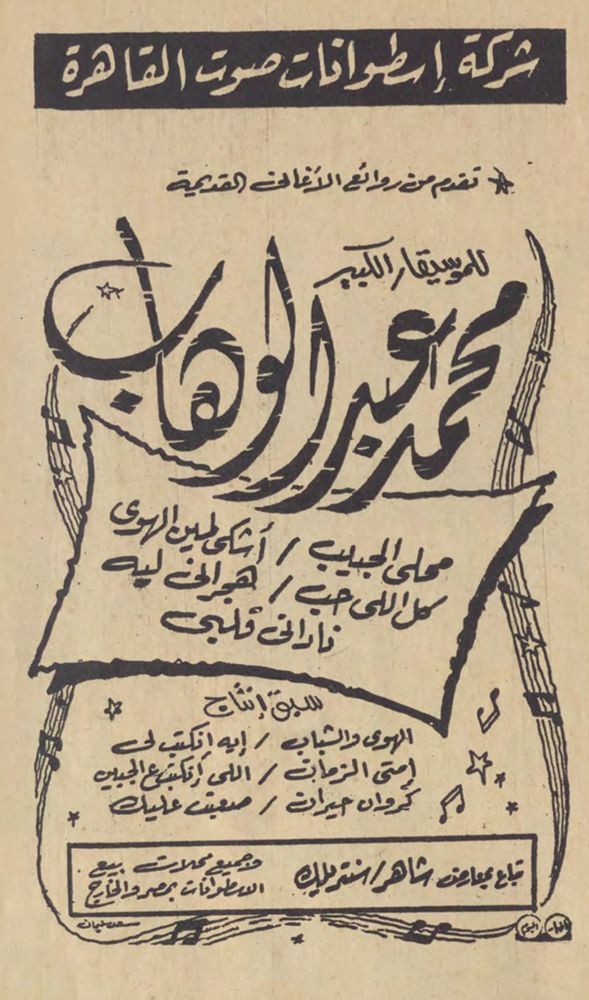
Sawt al-Qahira Mohamed Abdel Wahab records ad, al-Kawakib 1968
It lists old Abdel Wahab classics by title, now on Sawt al-Qahira records in shops in Egypt and abroad, so each fan's old favourites become records to play today.
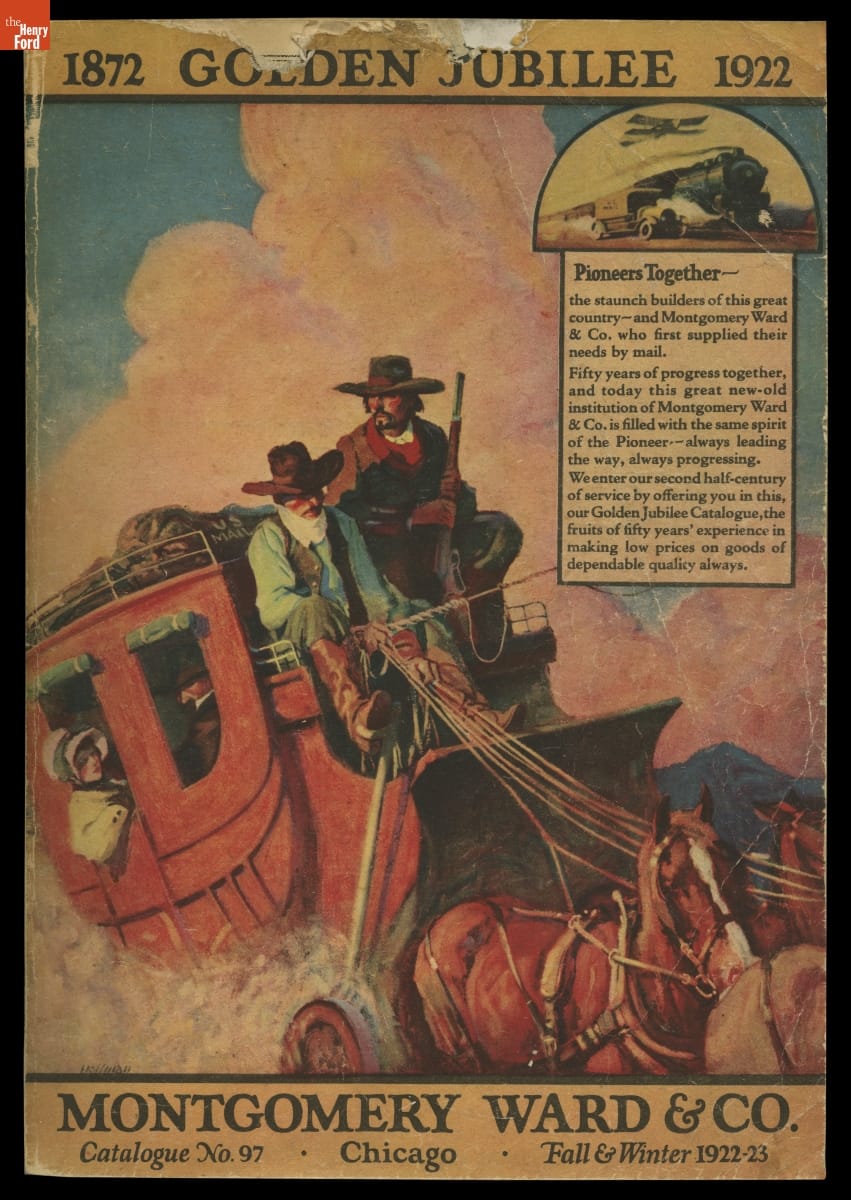
Montgomery Ward golden jubilee catalog cover, fall-winter 1922-1923
A stagecoach fills the cover while a small inset shows a train, car and aeroplane, so the pioneer past vouches for the firm and the copy promises today's low prices on dependable goods.
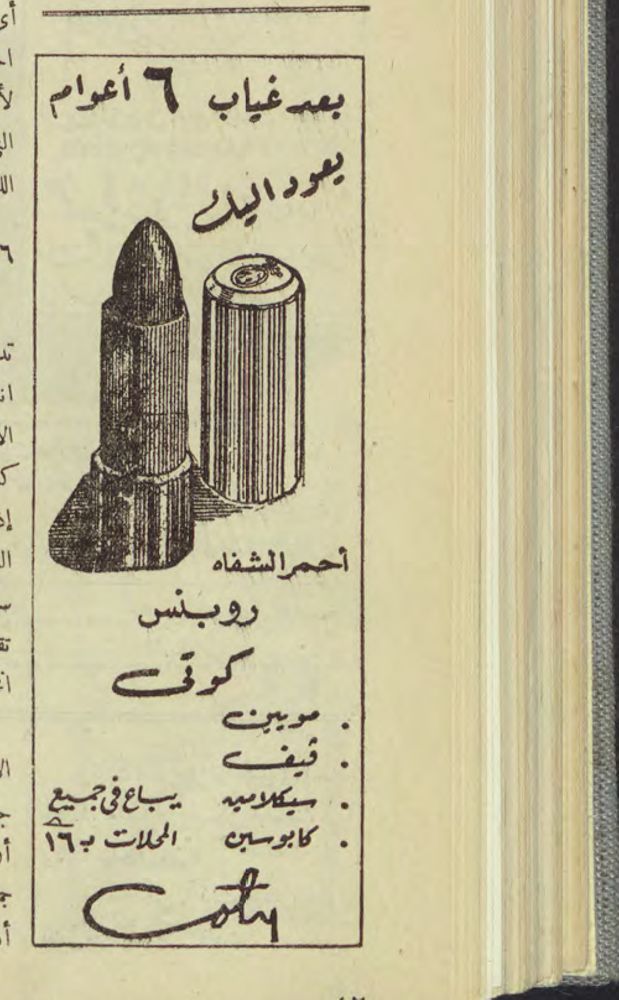
Coty lipstick ad, Bint al-Nil 1946
"After an absence of 6 years, it returns to you" brings back the same Rubens lipstick readers once used, then states four named shades and one price of 16 in all shops.
Corn saved the Pilgrims, eat more corn leaflet
It carries corn from the Pilgrims' and pioneers' table into today's kitchen, then says plainly what it does now: fifty dishes, a free USDA booklet, and one wheatless meal tomorrow.

Air France airline ad, Bint al-Nil 1950
The engraving of a gallant doffing his hat to a lady carries the old French salon welcome into the cabin, and the copy states today's promise: charm, gaiety, elegance, an honoured guest.
Mother Seigel's Syrup booklet: After seven years, what?
After seven years of silence in a shaken world, it brings back the same jolly gentleman, 'still always merry & bright', and says plainly what the syrup does now: never a pang of indigestion.

Rihlat al-Andalus travel book ad, al-Kashkul 1928
It carries Arab Andalusia into the present through a map of the conquests, Spanish names with their Arabic forms and 22 photographs of its monuments, in one 20 piastre book.
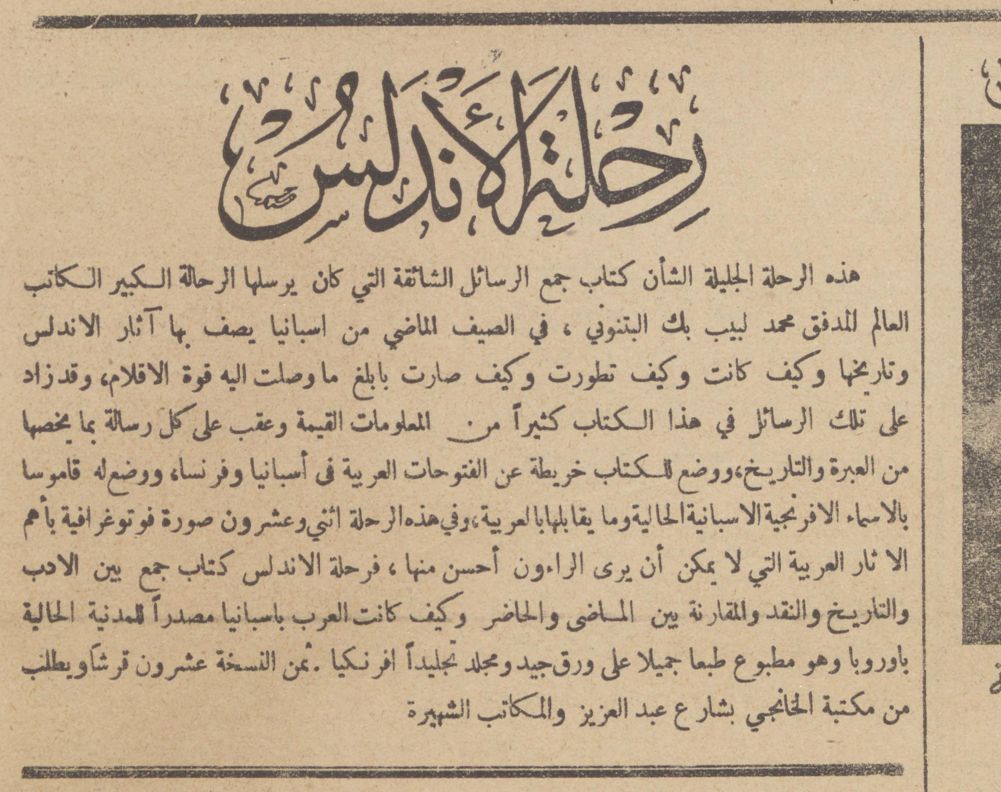
Rihlat al-Andalus travel book ad, al-Kashkul 1928
A known traveller's letters and 22 photographs of Arab ruins in Spain turn the Arab past into a bound book to own, praised in the magazine's tone without claiming the past was better.
Domino's KSA: the original store was real, not staged
A genuine film photo of an early Saudi store, with bilingual signs, a Saudia office next door and period cars outside, lets real local history vouch for the brand instead of a claimed founding year.
Riyadh Season: Fadl Shaker returns, 22 October concert, tickets 7 Oct
Film reels of past concerts carry the singer's real history into a dated night in Riyadh, then the poster states plainly when tickets go on sale.

A man talks to an ice cream sandwich like a lost love he failed to replace, then 'you asked for it, the original recipe is back' brings the missed taste into today, available now.

الطعم الأصلي ما يتغيّر… زي أكل ماما اللي كبرنا عليه #عافية #الذرة #عيشها_بقلبك_عيشها_بعافية
It carries something real from childhood, a mother's recipes and their taste, into the present, then says plainly what the oil does today: cook those same dishes with the same taste.

علاقتنا معكم.. #علاقة_طويلة_عمر! 💙
It reaches back 20 or 30 years, and each remembered moment is a real banking act, a first salary, a car, a profit payout, so the shared past vouches for the bank.

It carries something real from childhood, mum's recipes and their taste, into the daughter's kitchen today, and says plainly what the oil does now: keeps that taste while she adds her touch.

It reaches back to what parents taught, then shows the same habits alive in today's homes and passed to children, without claiming the past was better.

Retro TVs and the return of the Ramadan riddles carry a real ritual into the present, then the ad says plainly what it gives now: daily questions, rules and prizes.
Doing it wrong
Ads that make the Avoid mistake.

Studio Misr cinema re-release ad, Bint al-Nil 1947
Its central claim, 'pre-war films are stronger and greater than post-war films', tells viewers things were better then, even as it brings al-Azima back to the screen from 2 June.
If this library is useful, leave an email
We send new patterns, ads, and notes when we add them. Name and phone are optional.
You are on the list
We will write when we add more library material.