
Define
A chart, map, or count that is the argument, not an illustration next to the argument.
Mechanism
Sighted evidence. The reader is asked to believe their eyes: a bar, a share, a spread on a map.
Verdict
The claim is comparative or quantitative and the figure can be read without a caption doing the sell.
Don't
The number is decorative, or the chart needs a paragraph to explain why it matters. Decoration is not proof.
Copy skeleton
[OPEN: the doubt the buyer already has, in one line]
[THE FIGURE: one chart, map or count that answers it on sight]
[KEY: what one bar, dot or row stands for]
Source: [WHO COUNTED IT, AND WHEN]
[THE READING: one line on what the figure means for the buyer]
[ASK: the next step, short]
Gulf note
In an Arabic layout the eye enters from the right, so put the number you want read first on the right side of the figure. Print the source under it: GASTAT, an audit firm, or your own order count with the period it covers, because buyers on X and LinkedIn will ask. On Snapchat and TikTok a figure gets a second or two, so show one bar or one count per frame. Keep health and financial return claims to figures a regulator or registration already backs.
Rights-cleared examples

"Line reduced from 73 products to 7" case-study ad
The headline is a naked before-and-after ratio with a consequence attached, and because both numbers are odd and specific, 73 and 7, they read as a record rather than a boast.
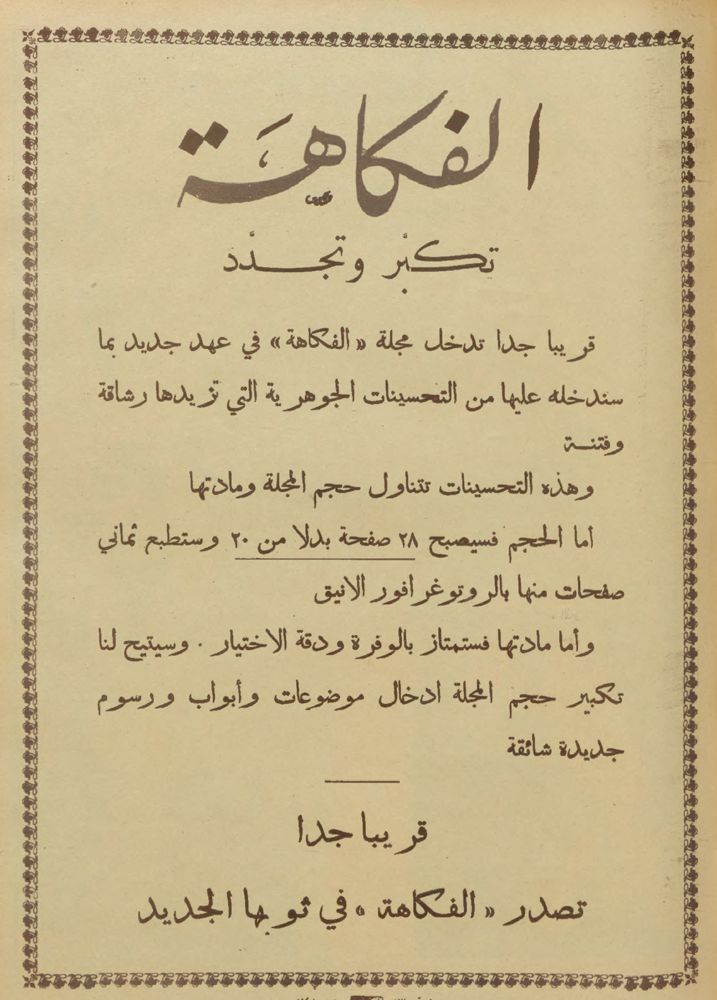
al-Fukaha magazine relaunch ad, al-Musawwar 1929
The page gives a sister magazine's relaunch a whole page of calm, bordered type, which itself signals that something important is coming.
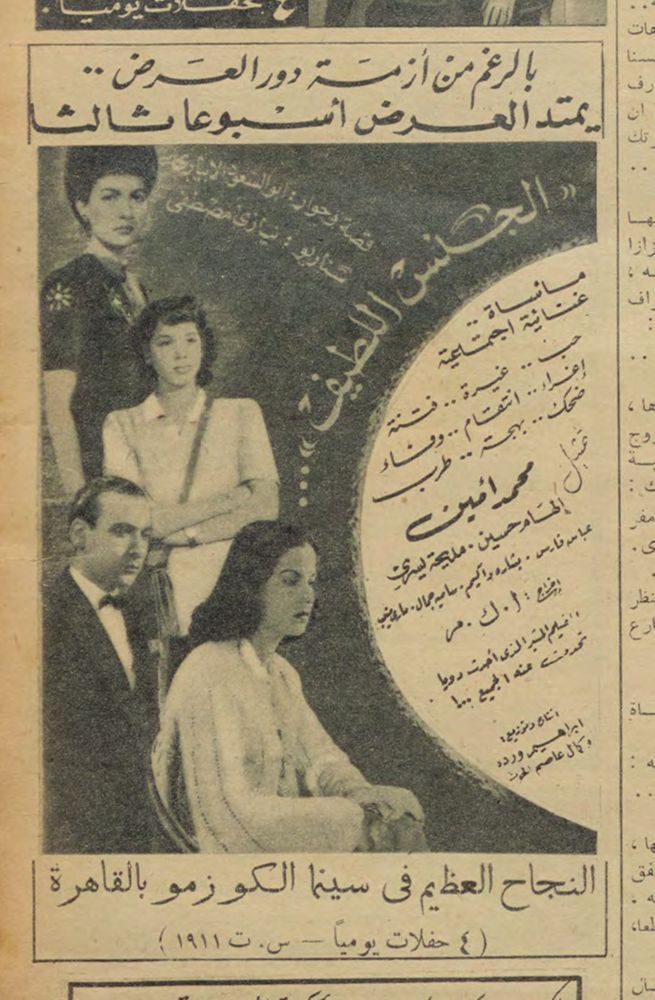
al-Jins al-Latif film ad, al-Musawwar 1945
The headline does not describe the film at all.
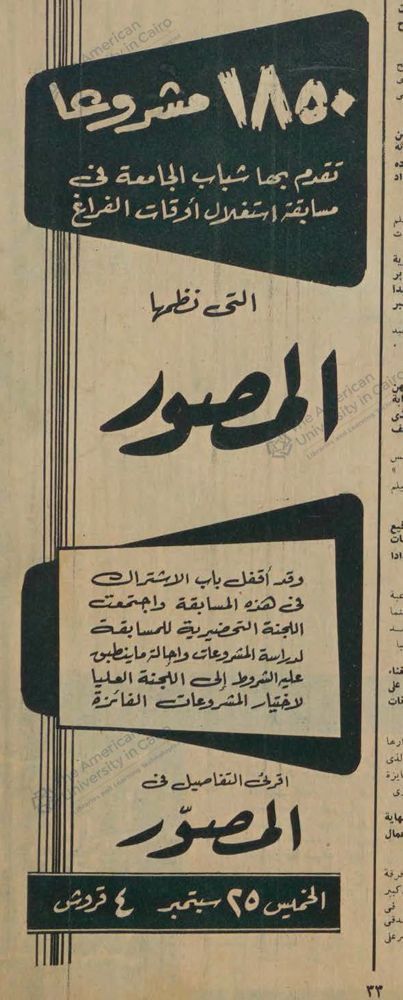
al-Musawwar magazine ad, al-Kawakib 1958
The biggest thing on the page is a count of entries from university students, which proves at a glance that the competition is large and that young readers care about it.
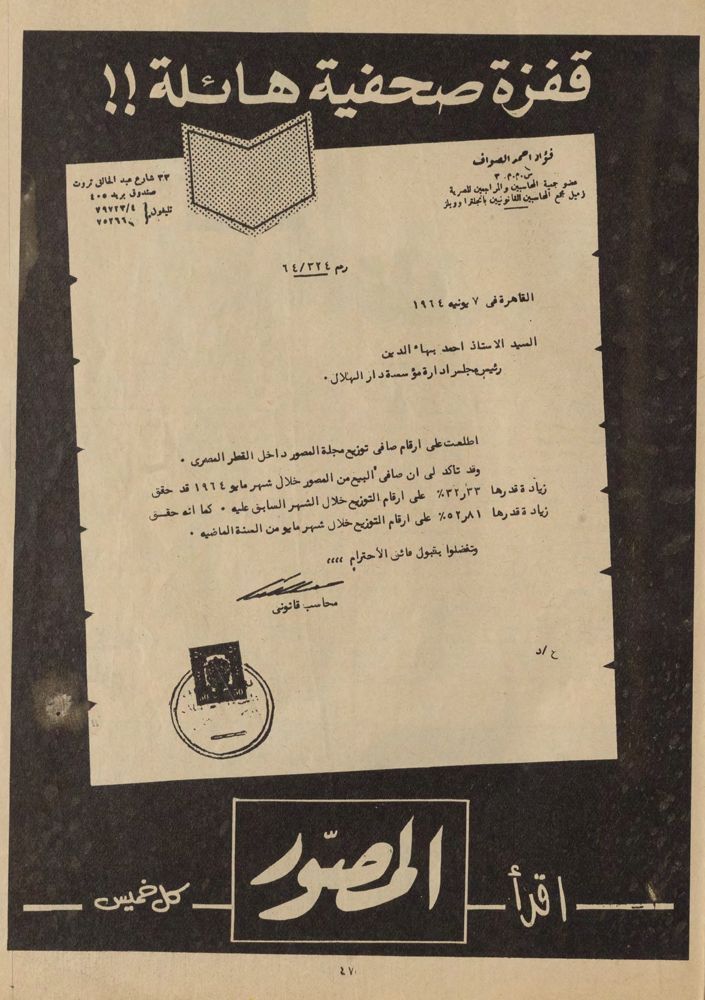
al-Musawwar magazine ad, al-Kawakib 1964
Instead of praising itself, the magazine prints a stamped, signed letter from a chartered accountant addressed to the head of Dar al-Hilal, certifying that May 1964 net sales rose against the previous month and against the same month a year earlier.
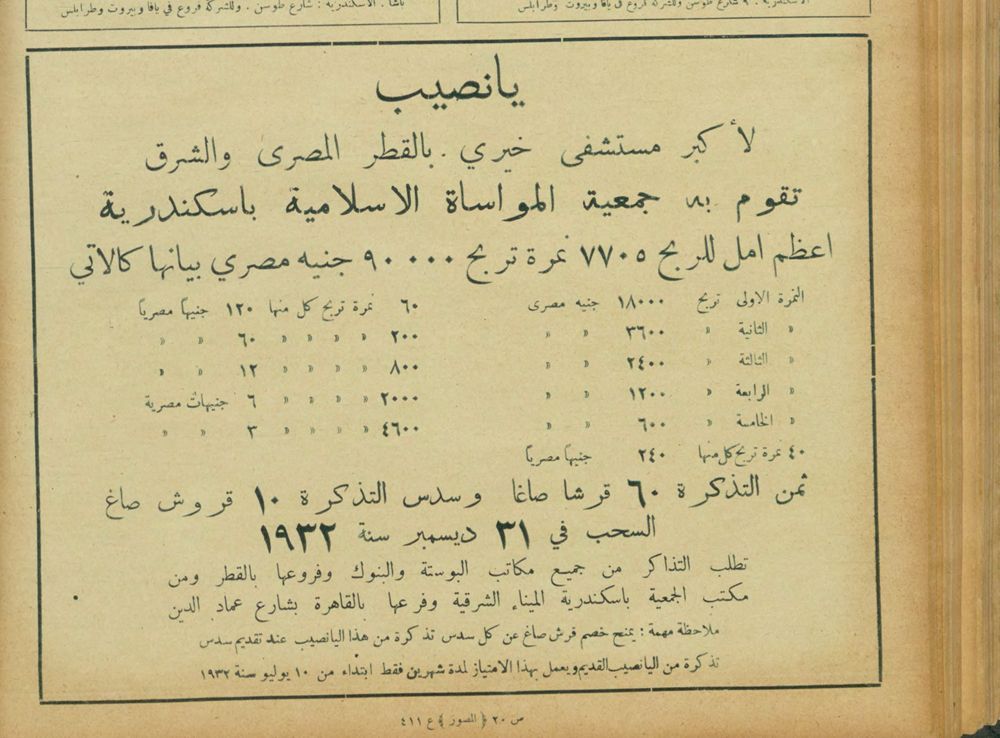
al-Muwasat Islamic Society charity lottery ad, al-Musawwar 1932
The page is mostly a prize table: 7705 winning numbers sharing 90000 Egyptian pounds, listed prize by prize, so the reader counts his chances instead of taking a slogan on trust.
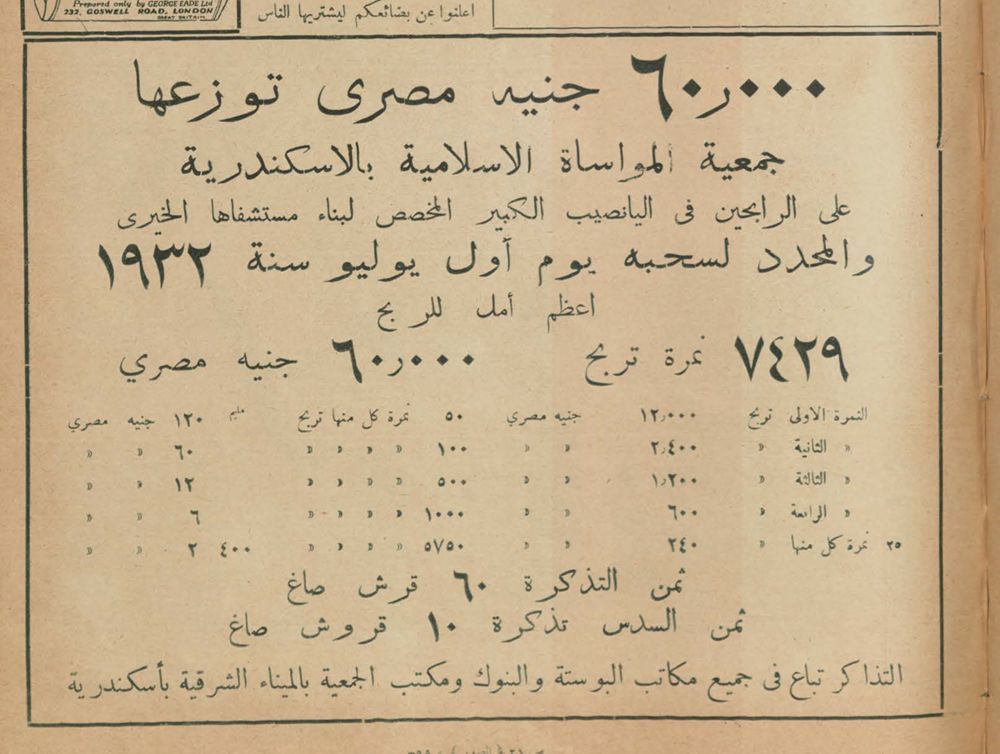
al-Muwasat Islamic Society hospital lottery ad, al-Musawwar 1932
The headline is the total prize money in huge figures, and the second big number, 7429 winning tickets, answers the reader's first doubt: will anyone like me actually win.

Alexandria stadium lottery ad, al-Kashkul 1926
Before any prize, the second line answers the question of trust: licensed by the Egyptian government, guaranteed by the Alexandria municipality, and its income set aside to build the city's new stadium for the first African games.

Alexandria stadium lottery ad, al-Kashkul 1926
Gambling is made respectable in one sentence: the draw is licensed by the government, guaranteed by the municipality, and its takings will build Alexandria's stadium for the first African games, so buying a ticket reads as backing a civic project.

Alexandria stadium lottery ad, al-Kashkul 1926
A lottery has to fight suspicion, so the first lines stack official backing: licensed by the government, guaranteed by the Alexandria municipality, proceeds going to the new stadium for the 1927 African Games.

Alexandria stadium lottery ad, al-Kashkul 1926
The ad reads like an official prospectus rather than a gamble: government licence, municipal guarantee and a civic purpose, the new Alexandria stadium for the 1927 African Games, all come before any prize.

Bank Misr oversubscribed share offer ad, al-Kashkul 1925
The bold number does the persuading: 25,000 shares were offered and 27,701 were taken by the third day.
If this library is useful, leave an email
We send new patterns, ads, and notes when we add them. Name and phone are optional.
You are on the list
We will write when we add more library material.