
Define
A higher reference number is shown first so the real price reads as a concession, not as a starting bid.
Mechanism
Contrast. People judge a price against the first number they see. The anchor must be a real comparison (was, compared to, cost to replace) or it collapses.
Verdict
We have a credible reference the buyer will accept.
Don't
The anchor is invented, or the street price is already known. A fake was-price trains distrust.
Copy skeleton
[VALUE of components] = [HIGH TOTAL]

Today: [ASK PRICE]

You save [DELTA] because [REASON]

[ASK]
Gulf note
Show VAT. An anchor against an imported alternative or an installment total can work. Do not insult what the local market already knows the street price is.
Rights-cleared examples

Kodak "You Press the Button, We Do the Rest" ad, 1889
The whole ad is a stack of objection removals delivered as flat statements: no dark room, no chemicals, no reloading, no learning.

Borden ad featuring Elsie the Cow
The mechanism is substitution arithmetic: instead of naming nutrients the reader cannot picture, the panel converts each one into a plate of food she already knows, so one glass visibly replaces a day of cooking.

Beecham's Pills advertisement, 1891
The headline puts a value in quotation marks at the top, "Worth a guinea a box", a gold-coin sum, and the foot of the same ad says the box costs 25 cents, so the reader meets the high valuation first and the real price lands as relief.
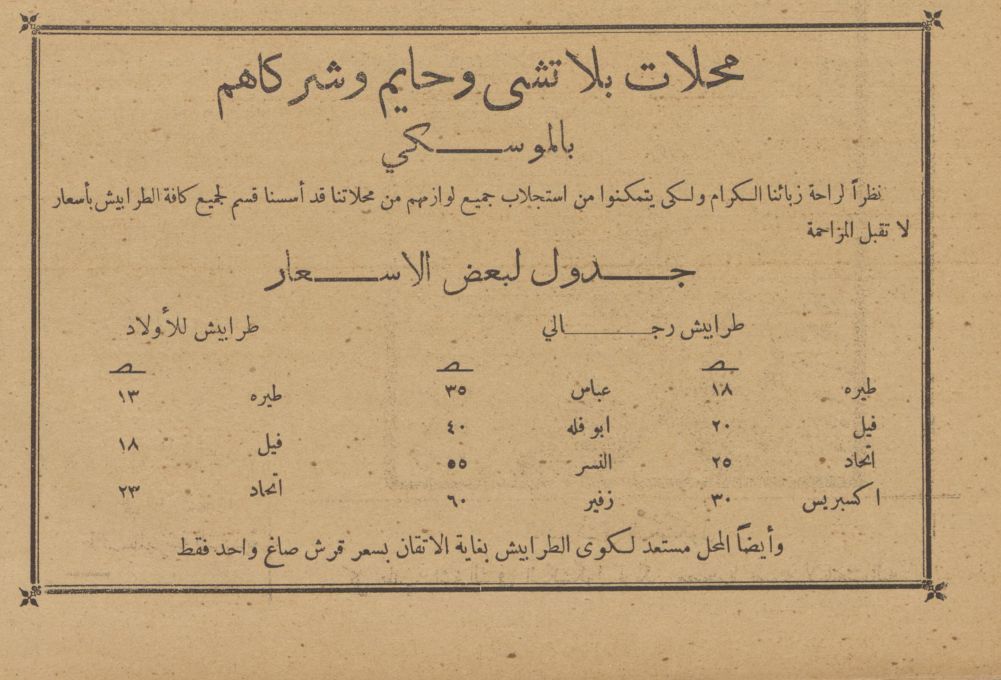
Blatchi and Haim tarboosh department ad, al-Kashkul 1927
Instead of saying its prices are low, the store prints a table: men's tarbooshes by named grade from 18 to 60 piastres, and boys' ones from 13 to 23.

Book-of-the-Month Club price of books ad, 1927
The ad answers a single quoted objection and nothing else, which is why it can afford to be this plain - it is written to the segment already close enough to have written in and complained.

Boston Illustrated guidebook poster, 1895
The poster is a point-of-sale piece, so it does the three things such a piece has to do and nothing more: the superlative claim, the product name, and where and for how much.

Cellucotton war nurses origin story ad
The origin story does the work a product claim could not: starting with war nurses in France licenses a taboo purchase as patriotic, professional and medical rather than intimate.
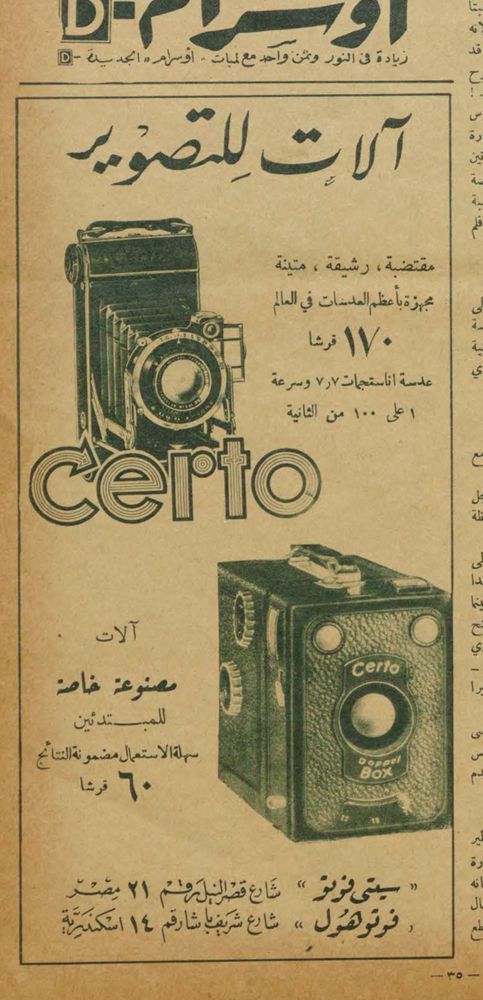
Certo cameras ad, al-Musawwar 1936
The ad shows two cameras as two clear tiers: a folding camera with lens and shutter specs at 170 piastres on top, and a simple box camera for beginners, easy to use with guaranteed results, at 60 piastres below.
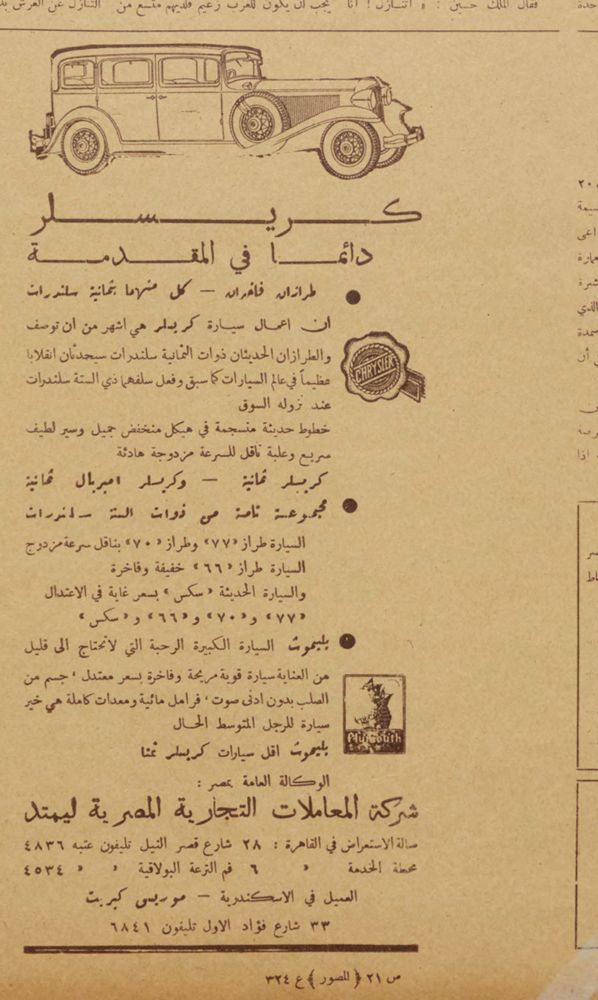
Chrysler cars ad, al-Musawwar 1930
The ad opens with the claim of leadership and the top of the range, eight-cylinder luxury models, then walks down the list to the Plymouth, named as the lowest-priced Chrysler.
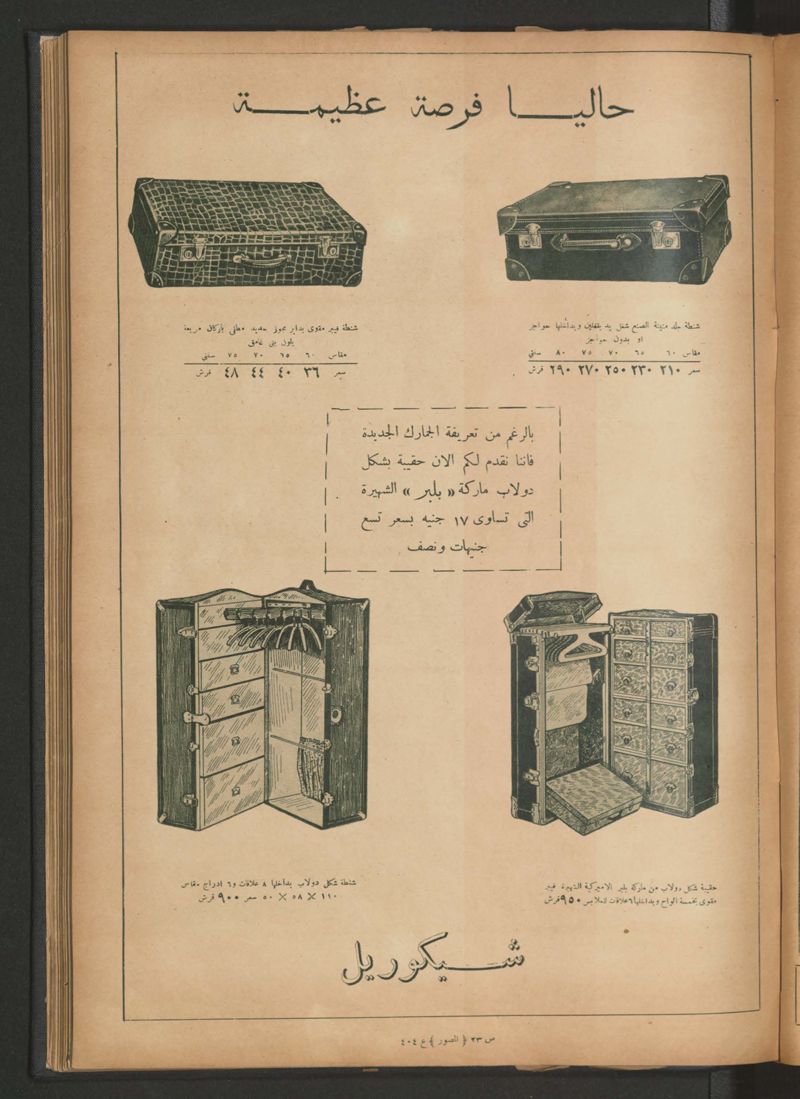
Cicurel luggage ad, al-Musawwar 1932
The boxed centre of the page gives the anchor and the cut in one sentence: a famous Belber wardrobe trunk worth 17 pounds, now nine and a half.
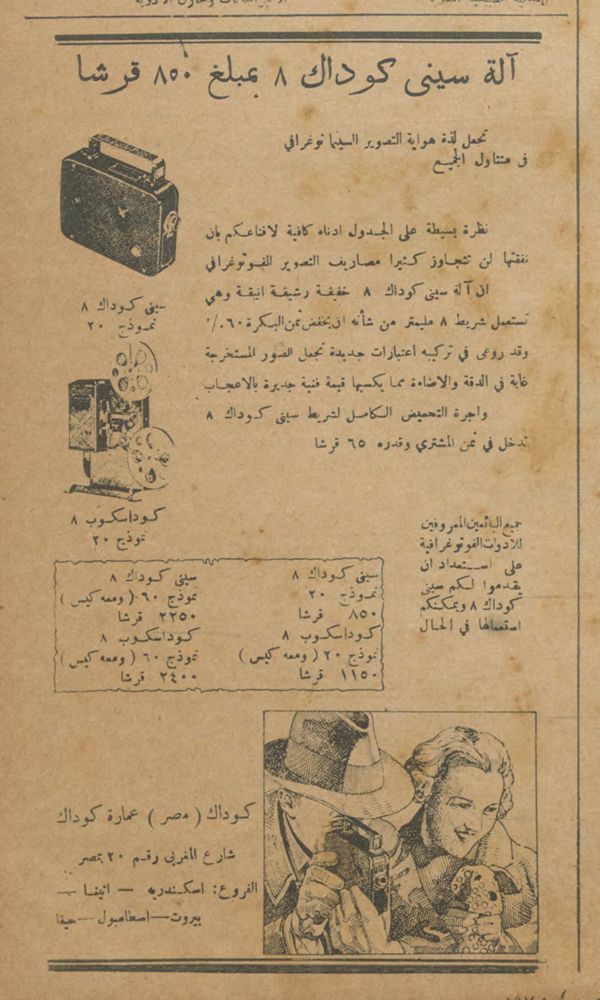
Cine-Kodak 8 home movie camera ad, al-Musawwar 1934
The price sits in the headline, which answers the first objection to home movies (they must be for the rich) before the reader has time to raise it.
Coca-Cola 5 cents chromolithograph poster, 1890s
The selling device is borrowed status: nothing is claimed about the taste, and the aspiration in the clothes, pearls and plumes does the work a product claim would otherwise have to do.
If this library is useful, leave an email
We send new patterns, ads, and notes when we add them. Name and phone are optional.
You are on the list
We will write when we add more library material.