
Define
A public declaration of how the world should work, with the brand standing inside that world.
Mechanism
Worldview first. Customers who share the frame arrive pre-sold. The product is an example of the stance.
Verdict
We have a real stance and a category that rewards a tribe, not a feature list.
Don't
The manifesto is mood copy. If nothing would change if a rival signed it, it is not positioning.
Copy skeleton
[BELIEF: how the category should work, in one sentence a competitor would not sign]
[WHAT IS WRONG NOW: the muddy road beside the paved one]
We [THE ROLE THE BRAND PLAYS IN THAT WORLD].
[PICTURE: the everyday life that changes when the belief wins]
[FIXED STEM] [ACT 1 THAT PROVES IT]
[FIXED STEM] [ACT 2]
[FIXED STEM] [ACT 3]
[ONLY NOW THE FACTS: SERVICES · WHERE · HOW TO REACH US]
[INVITE: one action for readers who share the belief]
Gulf note
Vision 2030 has made national-development stances common, so the risk in Saudi Arabia is a manifesto any large brand could sign: tie the belief to what your category does differently, the way the Royal Commission for Jubail and Yanbu ties each line to a sector it built. Institutions write it in fusha and prove it with a fixed sentence stem across a post series; founder-led and youth brands can say it in white Saudi dialect on X and TikTok. National Day, Founding Day and company anniversaries are the natural moments to publish. Stay inside the national consensus on politics and religion, and do not borrow official program marks without permission.
Rights-cleared examples

"Freedom of expression, of religion, from want, from fear" poster
It links the historic Bill of Rights (1791) to the contemporary global struggle (1941) using the familiar iconography of a torch, books, and globe, elevating the concept of freedom to a universal human right.

'This is America' melting pot poster
The headline points at a crowd of new arrivals, men in worn coats and a woman in a headscarf holding suitcases, baskets and papers, and says "This is America.", so the country is defined by the very people a wary reader might call outsiders.

Al-Hilal magazine issue ad, al-Kawakib 1964
The masthead is drawn huge and vertical, and a black wedge carries one positioning line: the magazine that offers the new Arab outlook on life.
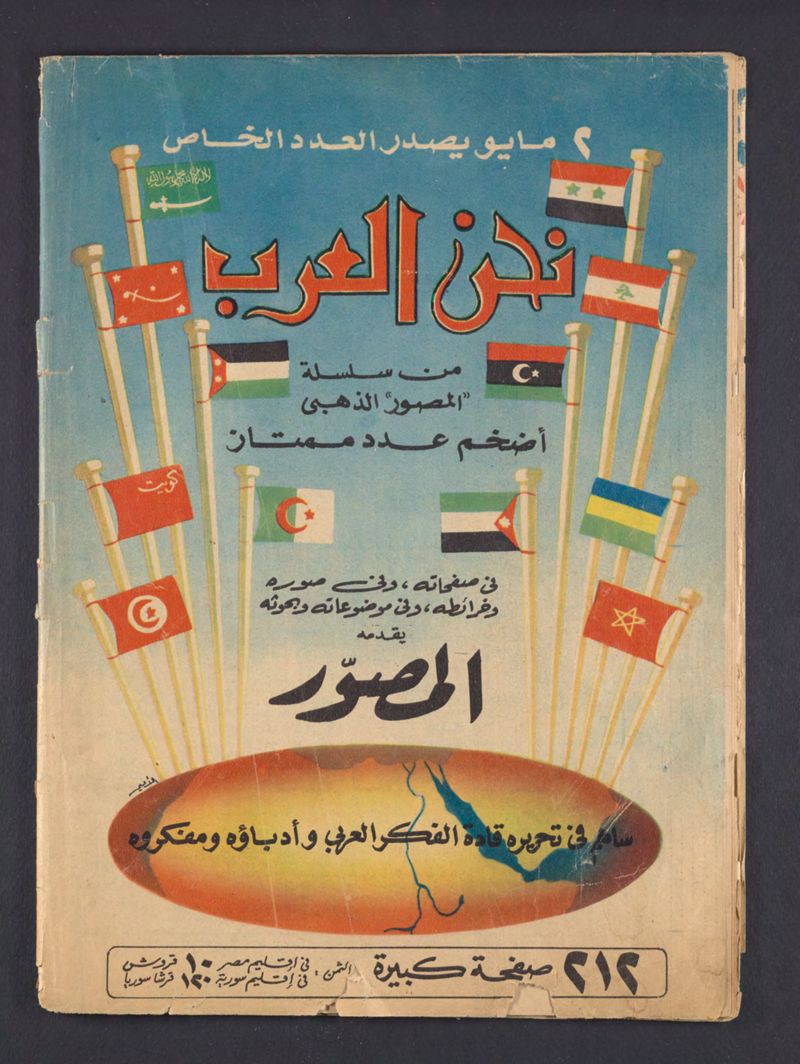
al-Musawwar Nahnu al-Arab special issue ad, al-Kawakib 1959
Two words, we the Arabs, sit at the centre of a fan of national flags rising from a globe, so the issue is sold as a statement of belonging before it is sold as pages.
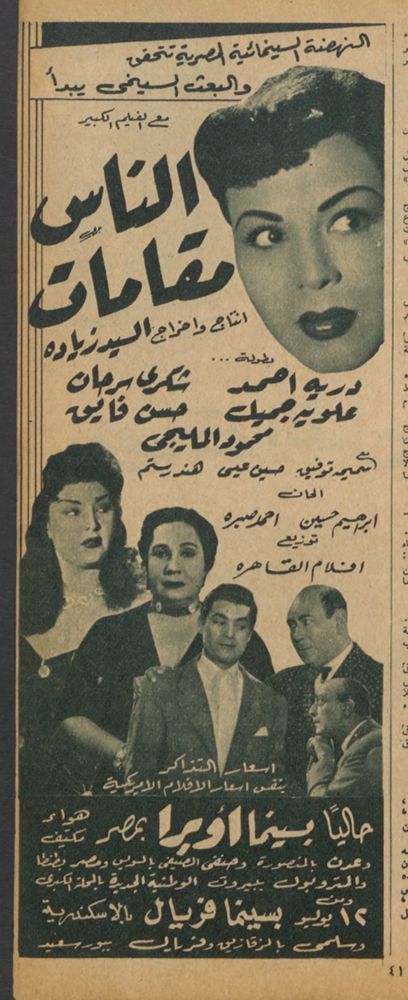
al-Nas Maqamat film ad, al-Kawakib 1954
The top line sells the film as proof that Egyptian cinema has arrived, so buying a ticket becomes taking part in a national moment.

Bank Misr corporate ad, Bint al-Nil 1950
The photo of the bank's marble hall with its galleries and columns shows solidity, and the copy calls the bank the edifice raised by Egyptian pride and the pillar of economic independence, so the building and the idea become one.

Bank Misr corporate ad, Bint al-Nil 1950
The bank leads with a national stance, not a rate: it is the edifice raised by Egyptian pride, the pillar of economic independence and the founder of the country's big industries.

Bank Misr group of companies institutional ad, Bint al-Nil 1957
The headline casts the bank's companies as the front line in a war for economic independence, and the closing paragraph says they fought side by side for 36 years until the revolution and full evacuation of the land.

Bank Misr holiday greeting ad, Bint al-Nil 1956
There is no product and no offer: the bank's name in large calligraphy congratulates the glorious Egyptian nation on two holidays at once, Eid al-Adha and Liberation Day.

Bell System 'The Good Road for Universal Service' ad, 1911
Uses a highly relatable, concrete analogy: a macadamized highway versus a muddy cross-road: to explain the abstract benefit of a single, unified telephone network.
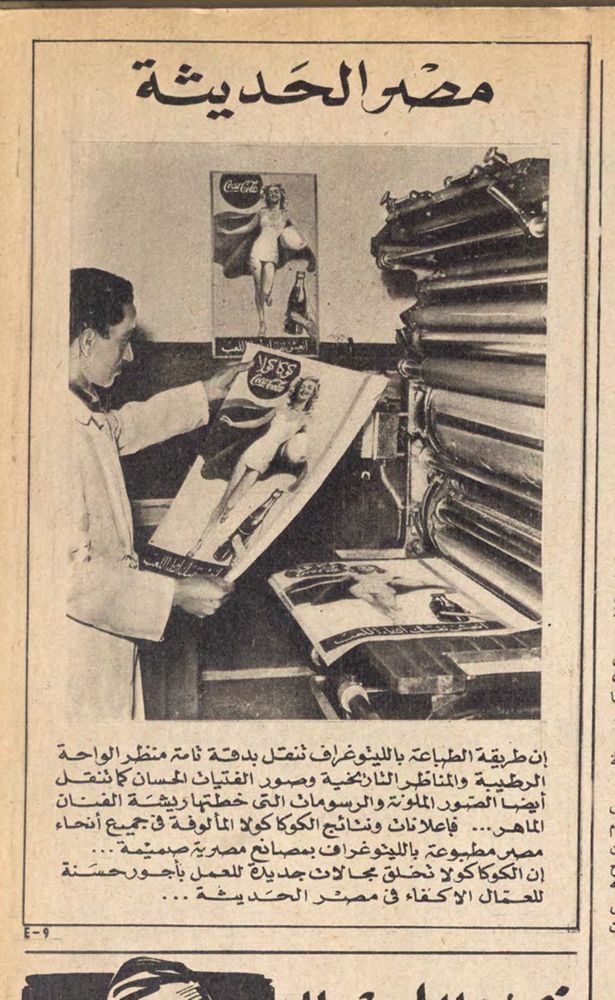
Coca-Cola Modern Egypt corporate ad, al-Kawakib 1952
The ad does not sell a bottle.
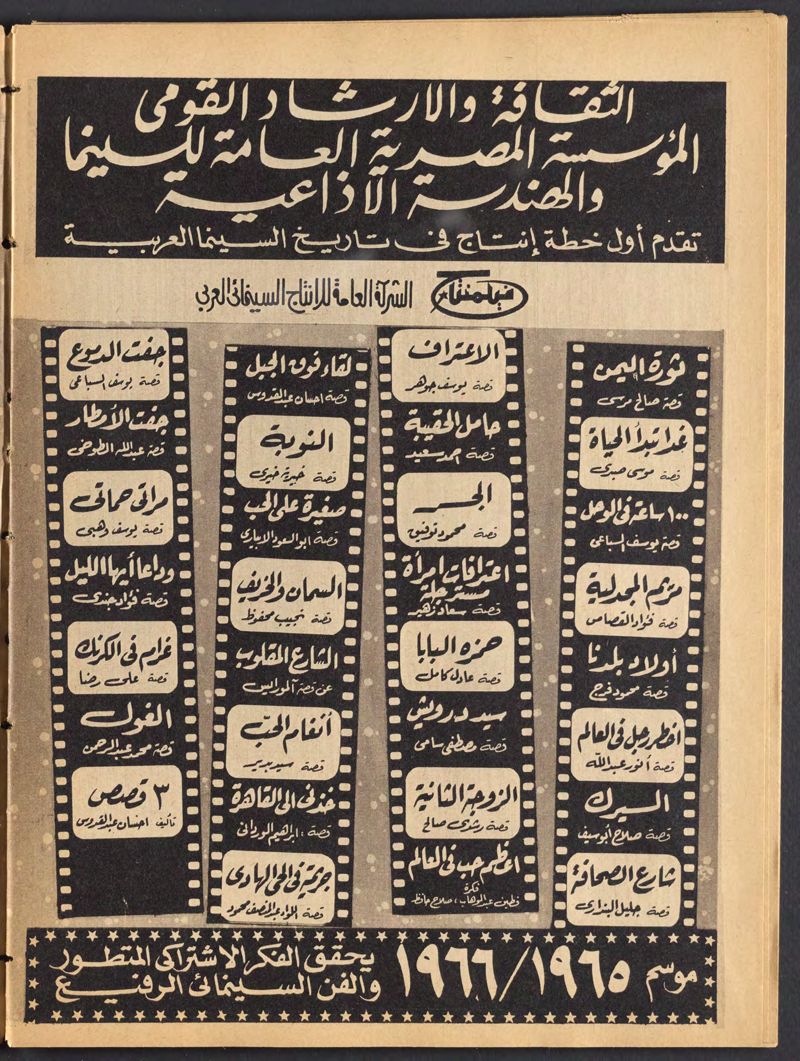
Egyptian General Organization for Cinema film slate ad, al-Kawakib 1965
The page sells scale and seriousness at once: more than 30 titles packed into four filmstrips, each one credited to a known novelist such as Naguib Mahfouz or Ihsan Abdel Quddous.
If this library is useful, leave an email
We send new patterns, ads, and notes when we add them. Name and phone are optional.
You are on the list
We will write when we add more library material.