
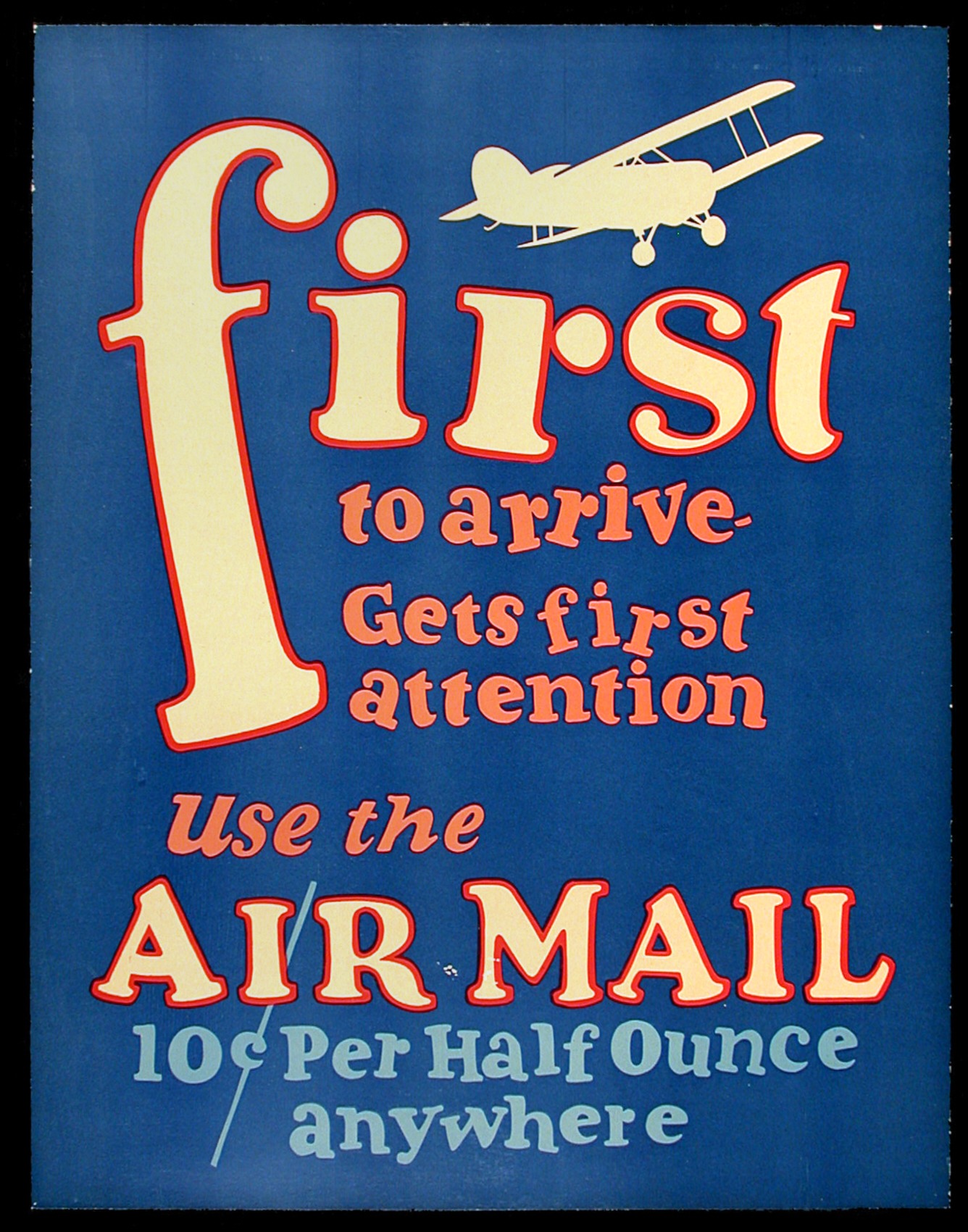
Airmail Poster Advertising the Ten-Cent Rate, 1927
The pattern
This still is filed under Image carries the claim.
Define
One image does the entire argument. Copy, if any, is a caption, not a second ad.
Mechanism
Pictorial claim. The picture is readable as a sentence. If we need a paragraph, we picked the wrong picture.
Verdict
The idea is visual and the surface is a poster, a feed, or a silent frame.
Why it works
The whole poster is one dominant word carrying a self-interest claim, with the rest of the sentence dropped to secondary scale so the reader gets the promise before the instruction. The argument is about the recipient, not the sender: it converts postage from a cost into a competitive advantage over the other envelopes in the morning's stack. The instruction line and the price sit at the bottom in a separate colour so the objection (what does it cost) is answered on the same sheet without diluting the claim. The stacked, hand-lettered type with red outlining lets a single flat ink colour read as three levels of hierarchy at counter distance.
Steal this when
When you sell speed or priority and the real buyer benefit is what happens on the other end, not the transit time itself. Also when you have one word that can carry the claim and you can afford to give it half the layout.