
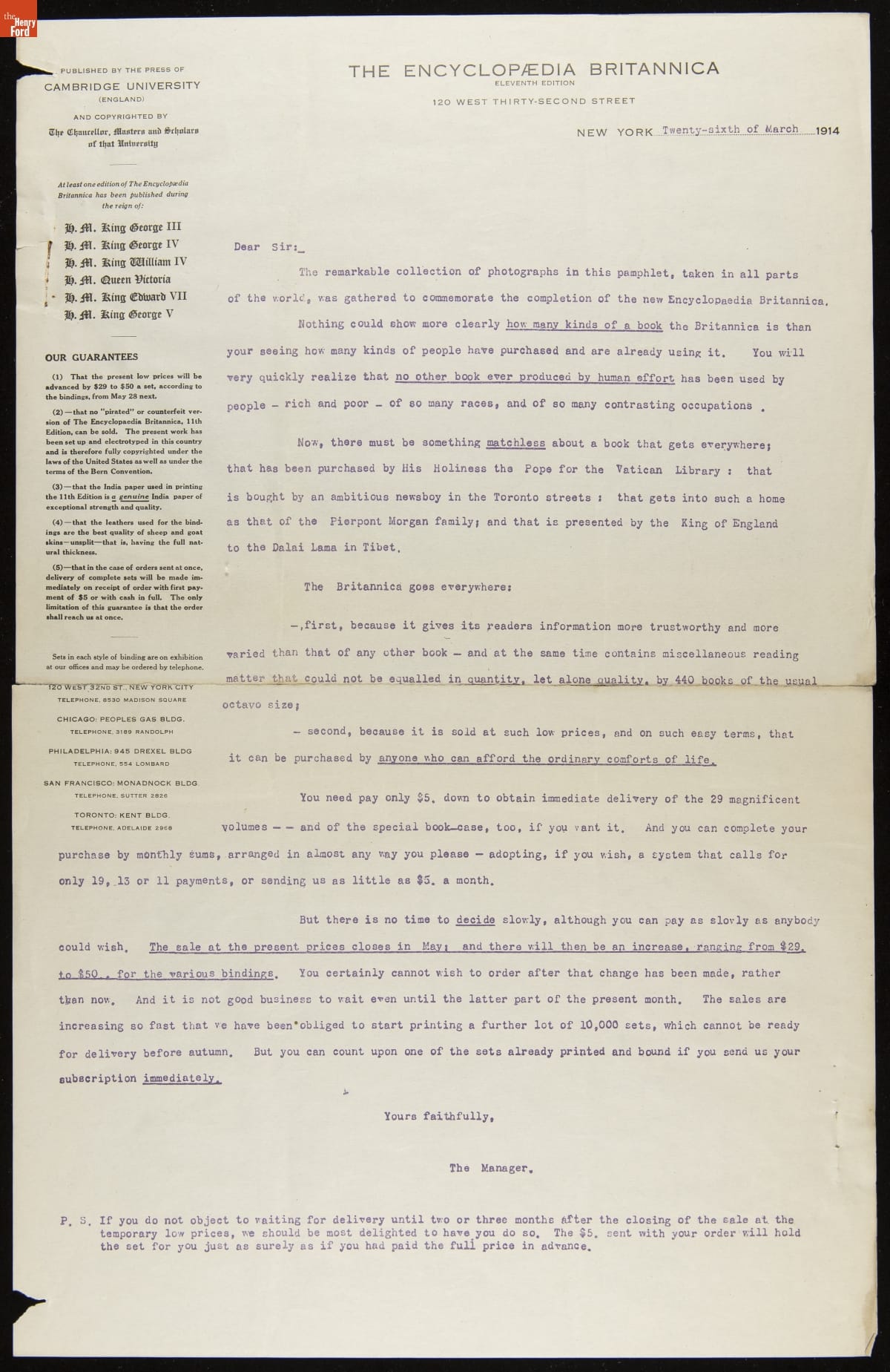
Sales Letter from The Encyclopaedia Britannica, March 26, 1914
The pattern
This still is filed under Price-anchoring offer.
Define
A higher reference number is shown first so the real price reads as a concession, not as a starting bid.
Mechanism
People judge a price against the first number they see. The anchor must be a real comparison or it collapses.
Verdict
We have a credible reference the buyer will accept
Why it works
The letter opens on the enclosure rather than the product, which gives the reader a reason to keep reading something already in his hands, then converts the pamphlet's photographs into the argument: breadth of ownership as evidence of universal usefulness. The owner list is built as a deliberate spread, the poorest and the most powerful buyer in the same sentence, so any reader falls somewhere inside the range and cannot place himself outside the market. Objections are then answered in order and in sequence, is it worth it, can I afford it, why now, with the printed guarantees rail carrying the risk-reversal so the typed body never has to slow down for it. The deadline is doubled: a price rise in May and a printing run that will not be ready before autumn, which makes waiting cost either money or months. The P.S. removes the last excuse by letting a hesitant buyer lock the price with $5 while accepting slow delivery.
Steal this when
Use this shape for a considered, high-price purchase where the reader's real block is affordability rather than desire: prove ubiquity with named owners at both ends of the income scale, park the guarantees in a separate panel so the argument keeps moving, then close with a dated price rise and a postscript that lets the hesitant buyer hold the old price for a token deposit.