
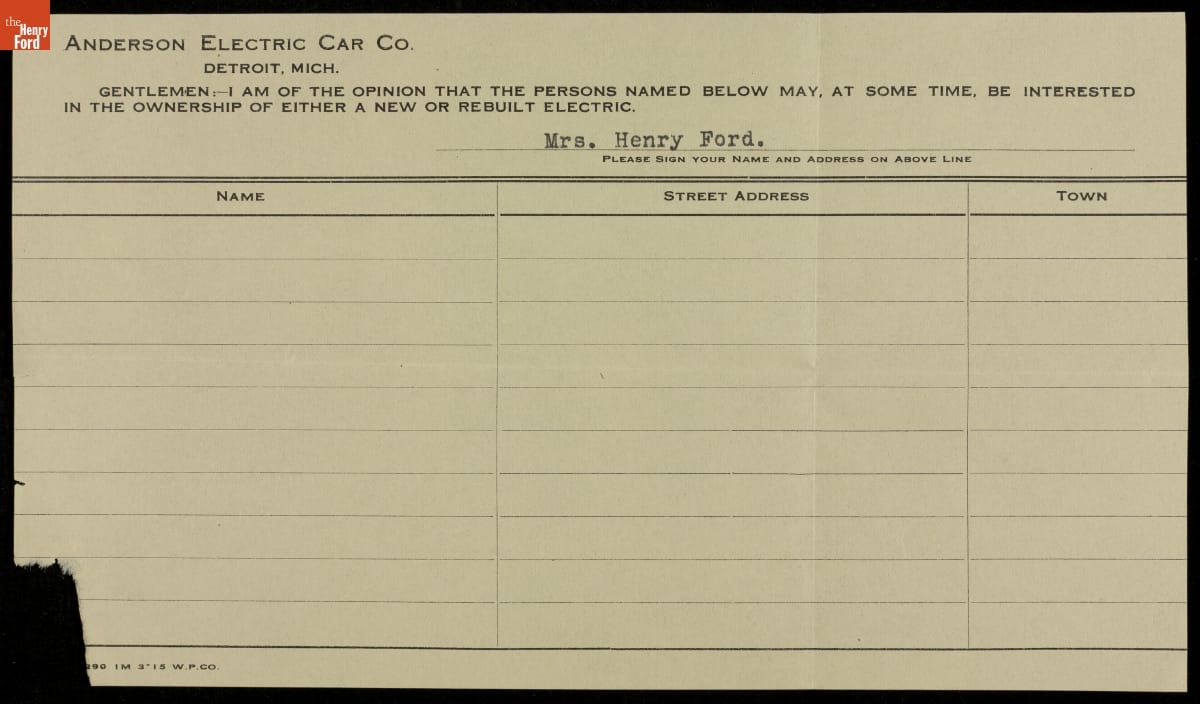
Anderson Electric Car Company referral reply form, 1915
The pattern
This still is filed under Scarcity close.
Define
A real limit (time, units, seats, eligibility) that makes delay cost something.
Mechanism
Loss of option. The close is the disappearing chance, not a louder adjective. Fake scarcity is a different and worse pattern.
Verdict
The limit is true
Why it works
The form does the persuasion by shape rather than by argument. The endorsement is pre-written in the first person and printed, so the sender never has to compose an opinion, only supply names under one she has already implicitly signed. Her own name is typed in before it reaches her, which converts the blank from a generic form into her document and creates an obligation to complete what someone has already started on her behalf. The nine ruled rows set the expected quantity silently: one name would look wrong on a grid built for nine. Asking only for name, street and town keeps the cost of each referral to a few seconds of handwriting.
The big idea
A referral request made so easy the owner only writes names: the endorsement is pre-written, her name is already typed, and the empty grid asks for many.
The offer
Sign the pre-written statement and list friends who may one day want a new or rebuilt electric car, giving each one's name, street address and town.
Lines from the ad
GENTLEMEN:-I AM OF THE OPINION THAT THE PERSONS NAMED BELOW MAY, AT SOME TIME, BE INTERESTED IN THE OWNERSHIP OF EITHER A NEW OR REBUILT ELECTRIC.Please Sign your Name and Address on Above LineSteal this when
Use this whenever you ask for referrals and the previous attempt produced agreement but no names. Pre-fill the referrer's details, pre-write the endorsement, and give more rows than you expect to get filled.
If this library is useful, leave an email
We send new patterns, ads, and notes when we add them. Name and phone are optional.
You are on the list
We will write when we add more library material.