
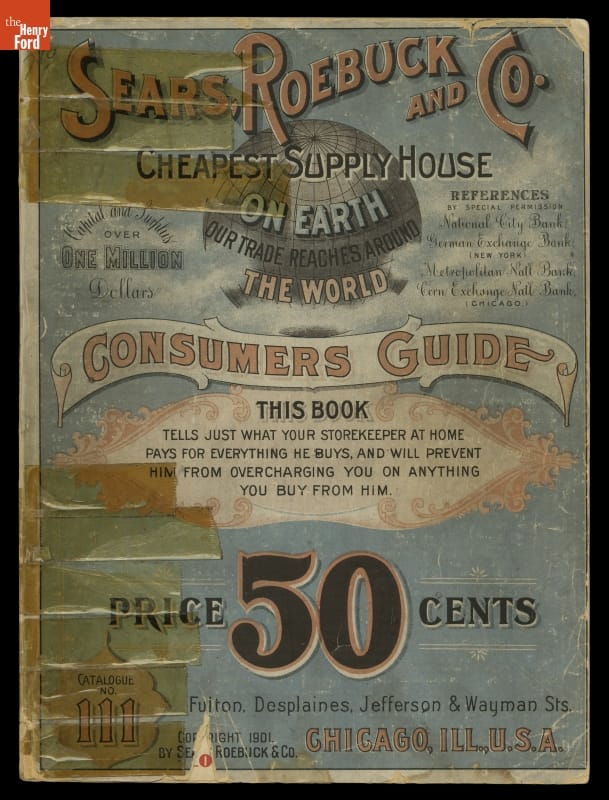
Sears, Roebuck and Company 'Consumers Guide, 1901,' Catalogue No. 111 (cover)
The pattern
This still is filed under Mail-order catalog.
Define
A catalog that is the store: browse, choose, order, without a clerk and often without a website.
Mechanism
Assortment as argument. Density, numbering, and an order path do the closing. The book is the funnel.
Verdict
We have a range, remote buyers, and a way to take the order on the same object.
Why it works
The cover sells the book, not the merchandise, and it does so by naming a specific antagonist the reader already half suspects: the storekeeper at home. Framing the catalogue as intelligence on his buying costs turns a price list into leverage, which is why paying fifty cents for a sales document feels rational rather than absurd. The superlative claim is then underwritten by things a farmer could check, four named banks and a stated capital figure, because a mail-order house asking for money by post has to answer the trust objection on the cover or not at all. The globe and the 'around the world' wrap do the same job pictorially, converting a Chicago warehouse into an institution.
Steal this when
Use this when you are selling direct against an incumbent middleman the buyer must currently trust blindly, and your real product is price transparency. Name the middleman, promise to reveal his costs, and put your credibility proof on the same surface as the claim.