
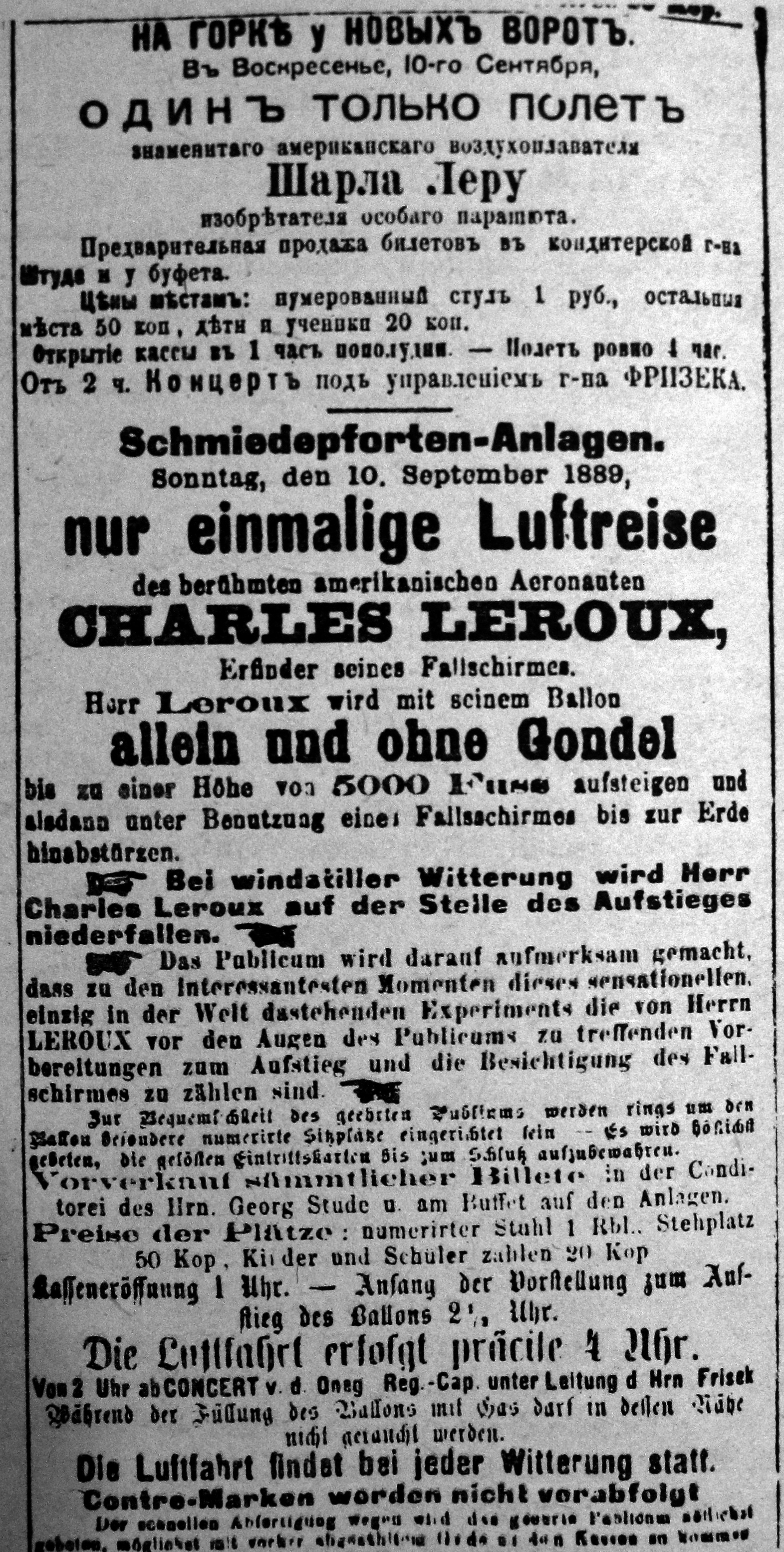
Charles Leroux flyer
The pattern
This still is filed under If-then promise.
Define
A conditional contract: if you do this, you get that. The sentence can be tested against the reader's own case.
Mechanism
Specificity does the persuading. The if names the action. The then names the outcome. Hedging kills it.
Verdict
We can name both the action and the result without adjectives
Why it works
The escalating benefit ladder does the whole job: each new claim is set in a larger face than the one before it, so scarcity (only one flight), then daring (alone and without gondola), then scale (5000 feet), then the payoff (falls to earth on a parachute) land as four separate typographic events instead of one sentence. Risk reversal is explicit and set bold near the bottom - the flight happens in any weather - which kills the reason not to buy a ticket in advance. The piece also sells the wait, telling the reader that the preparation and the inspection of the parachute are part of the show, which converts dead time before the ascent into a reason to arrive early. Running the same offer twice in two languages, in two separately styled typographic zones, lets one column buy two audiences.
Steal this when
You are promoting a one-time live event with no image budget and no photography, and every buying reason has to be carried by size and weight of type alone. Also the model to copy when one placement must address two language communities without diluting either.